
Table of Contents
Every IT refresh, cloud migration, and office cleanout leaves a pile of retired hardware behind – and your company has to decide what to do with it. The choice comes down to two paths: commercial electronics recycling or traditional disposal? That decision determines whether your old equipment becomes a liability or a return.
Traditional disposal hands your hardware to a hauler who may pocket the resale value and leave you exposed to data breaches, regulatory fines, and environmental penalties. Commercial electronics recycling wipes your data, recovers your value, and clears retired IT through one secure, compliant program. Read on for the head-to-head comparison and a clear answer on which wins.
Commercial Electronics Recycling vs. Traditional Disposal at a Glance
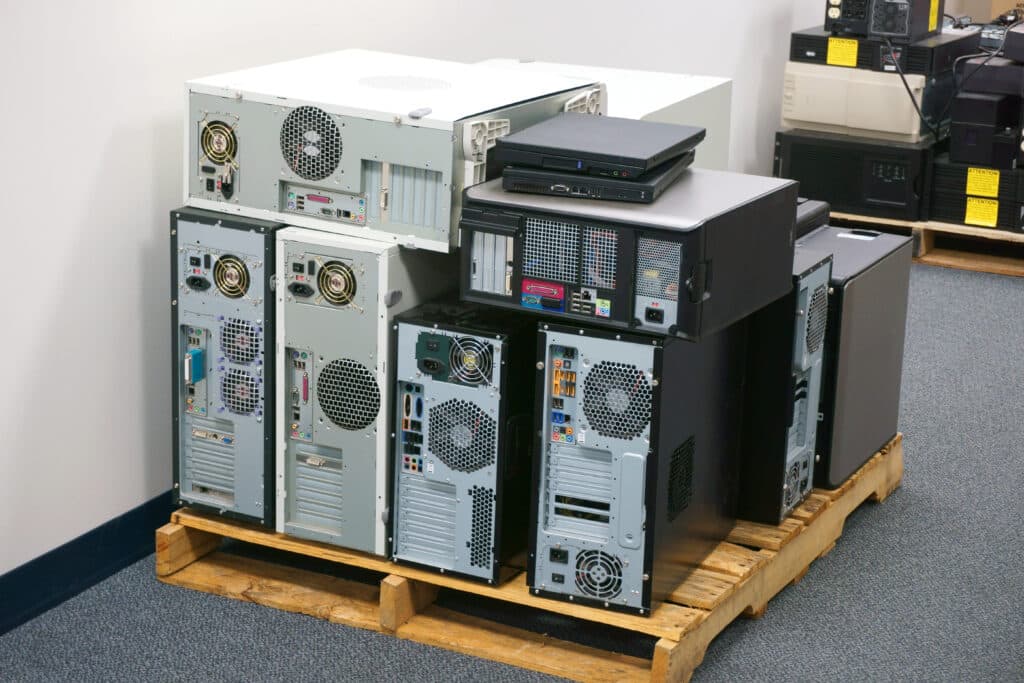
Throwing old equipment in the trash feels cheaper and faster, but for a company handling sensitive data and regulated waste, the fast choice costs far more than it saves. Roughly 62 million tonnes of e-waste are generated each year, and only about 22% is formally collected and recycled. Improperly discarded electronics make up the majority of the toxic material in landfills – and the liability lands on the company that owned the devices.
Here’s how the two options compare across the factors that drive your decision:
| Factor | Traditional Disposal | Commercial Electronics Recycling |
| Data Security | Drives left intact and vulnerable | Certified destruction of every data-bearing device |
| Compliance | No proof of proper handling | Certificates of Destruction and chain of custody documentation |
| Environmental Impact | Toxins leach into soil and water | Materials are recycled responsibly |
| Cost | Low upfront, high long-term risk | Predictable cost, often offset by value recovery to you and your team |
| Value Recovery | None – value goes to the hauler | Resale revenue returned to your budget |
| Reputation | Risk of negative ESG exposure | Documented sustainability gains |
The short answer: Commercial electronics recycling wins on every factor that matters to a business. The rounds below show exactly why.
What Each Option Actually Does With Your Hardware

The two paths diverge the moment your hardware leaves the building.
Traditional disposal treats data-bearing IT like office furniture. A hauler loads the truck, hauls it off, and pockets whatever scrap or resale value it can wring out. Where it goes next, and who touches it, is out of your hands.
Commercial electronics recycling is the secure, certified process of collecting, sanitizing, and processing retired technology so no data, value, or recoverable material is lost. It delivers five things every time:
- Secure collection from offices, data centers, and remote sites.
- Certified data destruction for every data-bearing device.
- Value recovery through testing, refurbishing, and resale of viable assets.
- Responsible recycling of non-functional equipment under R2 and e-Stewards standards.
- Full documentation proving what happened to each asset.
It’s a closed loop. Hardware leaves your facility, gets tracked and processed under controlled conditions, and returns to you as a verifiable record, often with recovered revenue to your budget.
Round result: Disposal makes hardware disappear, but recycling makes it accountable while maximizing on a financial return to you: recycling wins.
Round 1: Data Security and Compliance (GDPR, HIPAA, NIST)
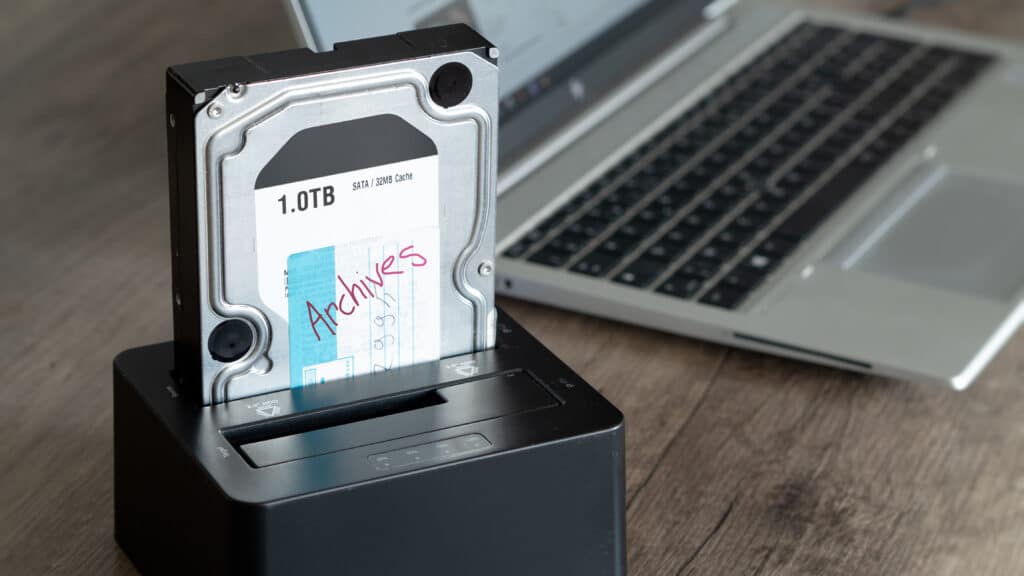
The biggest disposal risk is the data left behind. Deleting files or reformatting a drive doesn’t erase the underlying information – in fact, it often stays fully recoverable, and one overlooked hard drive can trigger a breach that costs millions.
Traditional disposal does nothing to address this. Commercial electronics recycling matches a destruction method to each media type:
- Overwriting: Software writes new data patterns over existing information. Ideal for functional devices headed for resale.
- Degaussing: A strong magnetic field disrupts data on magnetic media like traditional hard drives and tape. Not suitable for SSDs.
- Physical Destruction: Industrial shredding reduces drives to tiny fragments, making recovery impossible. Preferred for high-risk or obsolete media.
Certified recyclers perform this work to recognized standards, including NIST SP 800-88 Rev. 1 and DoD 5220.22-M. These standards hold the same alignments that your compliance obligations depend on:
- GDPR requires you to protect personal data through its entire lifecycle, including disposal.
- HIPAA demands secure handling of protected health information on any device.
- NIST SP 800-88 Rev. 1 is the national benchmark for media sanitization standards.
⚖️ The Legal Ledger: Regulators don’t care who threw the hardware away. They care who owned the data. If a generic hauler loses a pallet of your drives, the breach notification, the fine, and the headline all belong to you.
Round result: Disposal leaves your data exposed, while the recycling process proves it was destroyed; recycling wins.
Round 2: True Cost Over Time

Traditional disposal looks budget-friendly until you count the total cost. A low-cost hauler quietly costs you more than a certified recycling program ever would.
A generic pickup leaves you exposed to:
- Regulatory fines for improper e-waste and data handling.
- Breach liability when unwiped drives resurface.
- Lost resale value the hauler pockets instead of you.
- Wasted storage space while old equipment sits unprocessed.
Commercial electronics recycling reframes the math. Instead of paying to make hardware disappear, you run a controlled ITAD program where recovered value frequently offsets the cost of secure destruction and recycling and liabilities are no longer a risk due to proper handling of materials as per recycling and data destruction guidelines. For many organizations, a good ITAD program comes close to paying for itself.
📦 The Fast Fact: A standard freight or moving company operates under “common carrier” liability, covering losses by the pound, not by the value of the data on the devices. If a pallet goes missing, you’re reimbursed for the weight of the metal and plastic while you absorb the full cost of the breach.
Round result: The cheapest option on paper is the most expensive in practice – recycling wins.
Round 3: Value Recovery and ITAD

Not every retired asset is scrap. Laptops cycled out after three years, servers replaced during a cloud migration, and networking gear from a refresh may still hold real market value. Traditional disposal hands that value straight to the hauler. Commercial electronics recycling, through IT asset disposition (ITAD,) returns it to your budget.
A certified ITAD partner tests, sanitizes, refurbishes, and remarkets viable equipment, then returns a share of the revenue to your budget. Assets that commonly hold value include:
- Servers with secondary-market demand
- Networking equipment and switches
- GPUs
- Laptops and workstations
- Other enterprise electronics in working condition
See our full list of what we recycle and may be able to return on value to you.
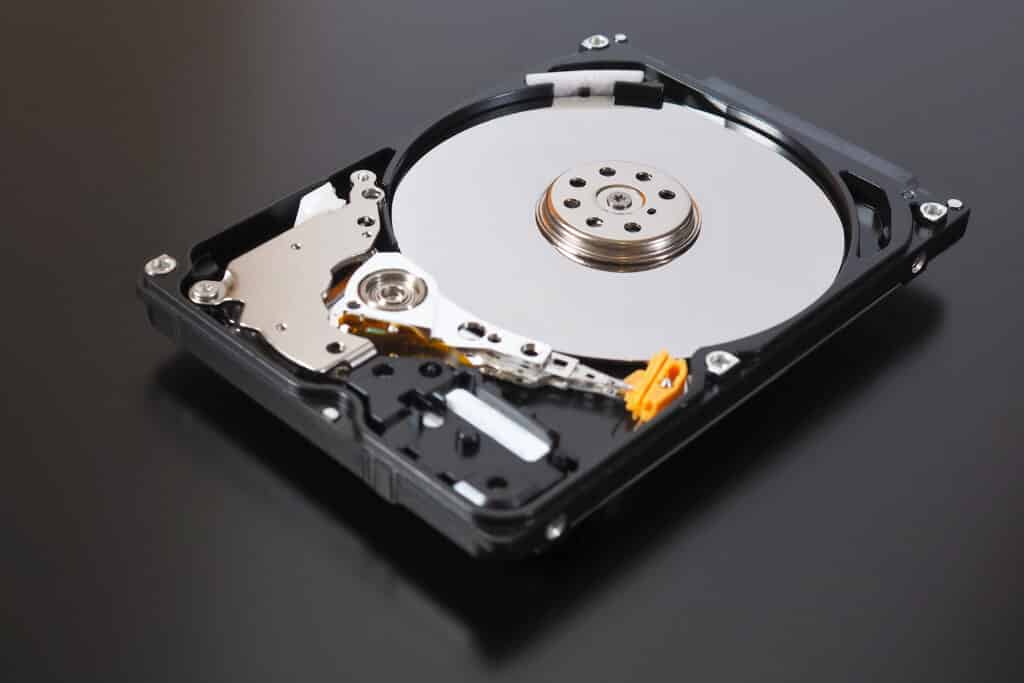
Security never takes a back seat to value. Before any asset is remarketed, its data-bearing components are thoroughly destroyed to meet and exceed NIST SP 800-88 Rev. 1 and IEEE data destruction standards. With a trusted electronics recycling partner like AIT, you’ll get financial return and data protection done at once.
Round result: Disposal is a pure expense, while choosing an e-waste recycler who offers full device lifecycle management solutions allows for a cost-recovery to your budget through refurbishing and remarketing of retired devices. Recycling wins.
Round 4: Audit-Ready Documentation

If your compliance team asks for proof that 400 retired drives were destroyed last month, what can you show them? Traditional disposal gives you an invoice reading “Electronic Scrap Removal” – and that won’t survive a HIPAA, GDPR, or SOC 3 review.
Commercial electronics recycling produces an ironclad paper trail on every project:
- Certificates of Destruction (COD): Tied to the serial number of every device erased or shredded.
- Certificates of Recycling: Proof that non-functional hardware was processed under R2 and e-Stewards standards.
- Chain of Custody Documentation: Serialized records tracking each asset from collection through final disposition.
Without these records, you haven’t legally closed the loop. With them, you answer any auditor’s question instantly.
Round result: Disposal leaves a documentation gap, while recycling closes it: recycling wins.
Round 5: Brand and ESG Performance

Customers, investors, and partners now evaluate companies on environmental and governance practices. How you retire your technology is a measurable part of that picture.
Commercial electronics recycling supports your brand by:
- Demonstrating sustainability with verifiable diversion metrics.
- Strengthening ESG reporting through environmental impact data.
- Maintaining compliance with waste and data privacy regulations.
- Reducing reputational risk tied to mishandled hardware or data.
Traditional disposal offers none of this. Worse, a single mishandled drive surfacing in an overseas landfill can undo years of brand-building in one news cycle.
Round result: Disposal puts your reputation at risk, while recycling builds it. Recycling wins.
The Verdict: Which Wins?
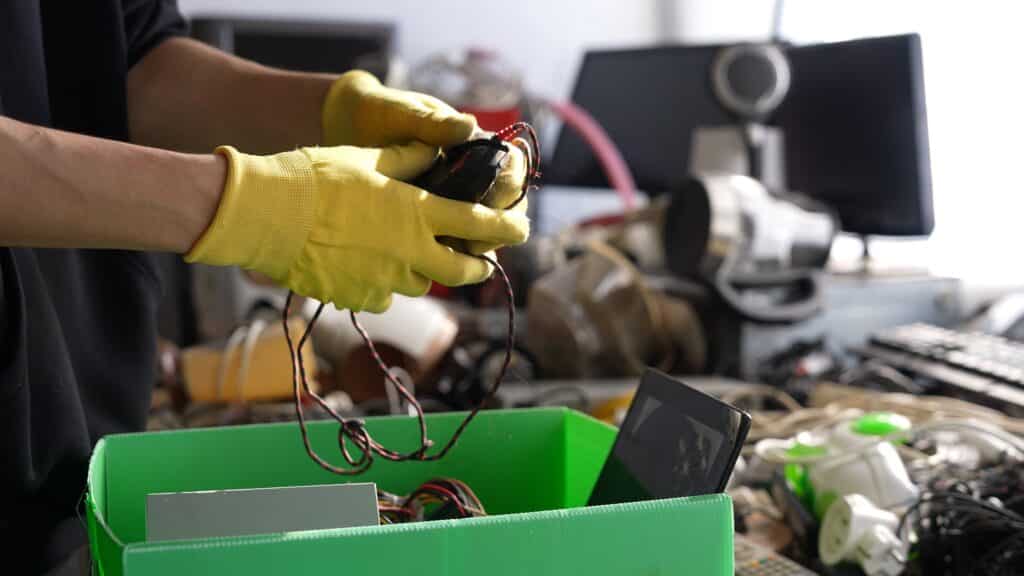
Across all five rounds, the result is the same. Commercial electronics recycling wins on data security, cost, value recovery, documentation, and brand performance. Traditional disposal wins only on the illusion of being cheaper and faster – an illusion that collapses the first time a fine, breach, or lost asset shows up.
For any organization handling sensitive data and regulated waste, recycling isn’t the more responsible choice. It’s the smarter business decision.
How to Switch From Disposal to Recycling

Moving off ad-hoc pickups is simpler than most teams expect. A clear, repeatable workflow replaces the scramble:
- Review your retired equipment. Identify what you need to remove; is it computers, servers, networking gear, storage devices, telecom hardware, office electronics?
- Contact a certified provider for an assessment. Share your project scope, equipment types, locations, and data security needs so they can map the right path.
- Schedule secure pickup and logistics. A strong partner coordinates collection with GPS-tracked vehicles and secure handling that streamlines the work for your IT and facilities teams.
- Process equipment securely. Your assets move through the right destruction, recycling, and ITAD workflows based on their condition.
- Receive your documentation. You get the Certificate of Destruction, Certificate of Recycling, and full e-waste report your records and auditors require.
A structured program turns disposition into a predictable, audit-ready routine instead of a recurring fire drill.
Partner With AIT for Commercial Electronics Recycling
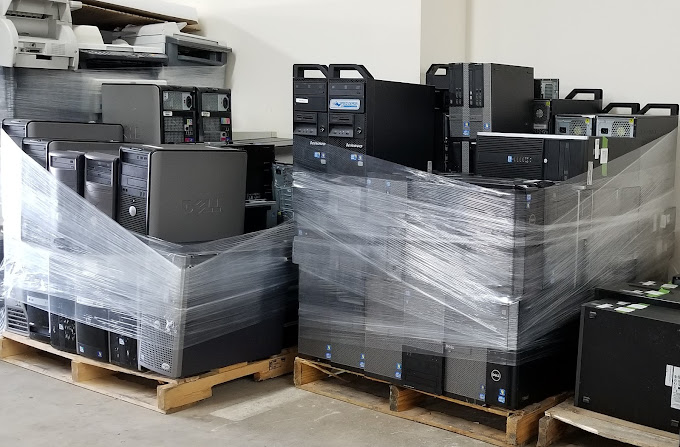
You’ve seen which option wins; the next step is choosing a partner who delivers it. With over 20 years of experience, AIT Electronics Recycling helps large organizations retire IT the right way, combining certified data destruction, transparent reporting, responsible recycling, and value-recovering ITAD in one service model.
Our processes align with the standards that matter most: R2v3, e-Stewards, NIST SP 800-88 Rev. 1, and DoD 5220.22-M. Whether you’re planning an equipment refresh, clearing legacy infrastructure, or building a recurring disposition program, we deliver secure, compliant, cost-effective results.
Ready to retire your technology in a way that wins?
- Call us now: 877-552-4826
- Start today: Contact AIT for a free quote today