Table of Contents
Every time your company upgrades to faster laptops, installs new servers, or replaces a fleet of smartphones, you create a byproduct. Retired devices become a stream of toxic and flammable materials known as electronic waste, or e-waste.
This guide breaks down exactly what constitutes as e-waste, the main categories to watch for, and why proper handling matters for your business.
What Constitutes E-Waste?
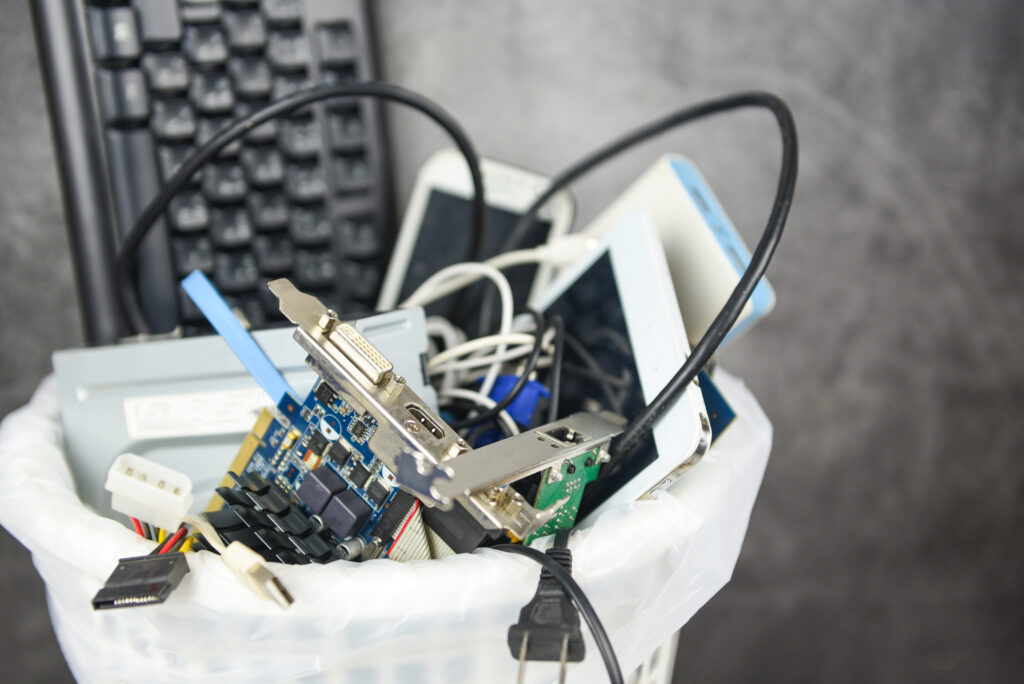
E-waste refers to any discarded device or component that runs on electricity or a battery. This includes equipment that is broken, outdated, unwanted, or simply at the end of its useful life.
The defining trait is simple: if it plugs in, charges, or holds a battery, and you no longer need it, it likely qualifies as e-waste.
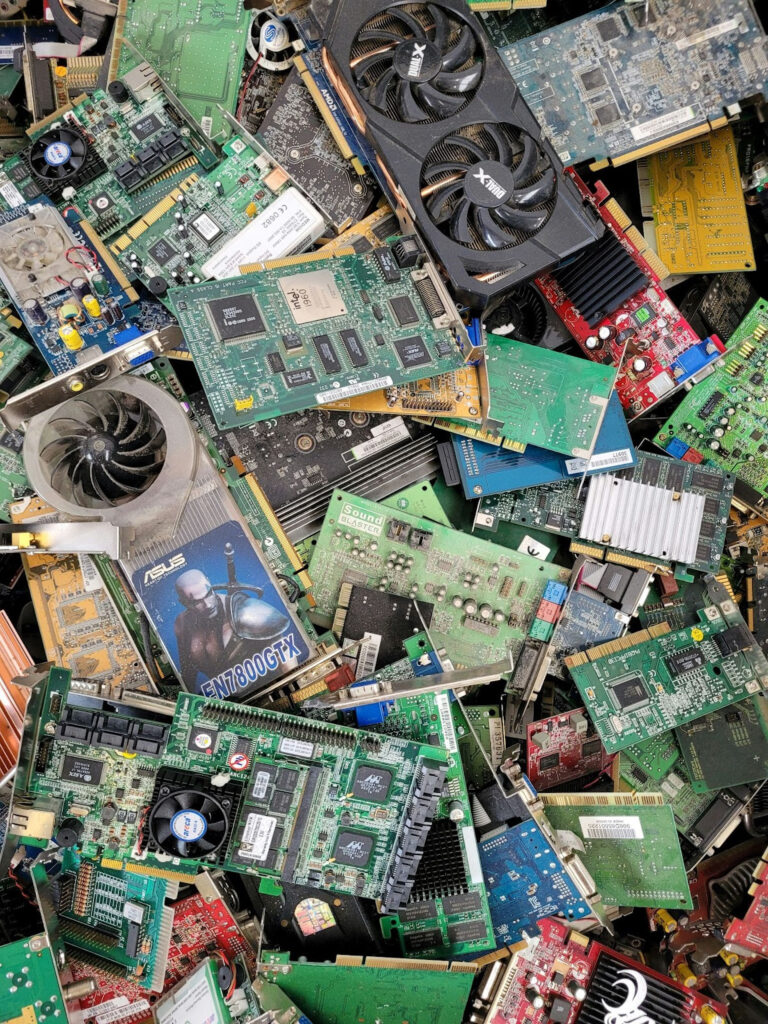
E-waste is more than clutter since many devices contain flammable and hazardous materials like lead, mercury, and lithium, alongside valuable recoverable metals. That combination is exactly why retired devices require specialized handling rather than a trip to the dumpster.
Common Categories of E-Waste

Business e-waste tends to fall into a few clear groups:
1. End-User Computing Devices
These are the tools your employees use every day. Because they are replaced frequently, they make up a significant portion of corporate e-waste.
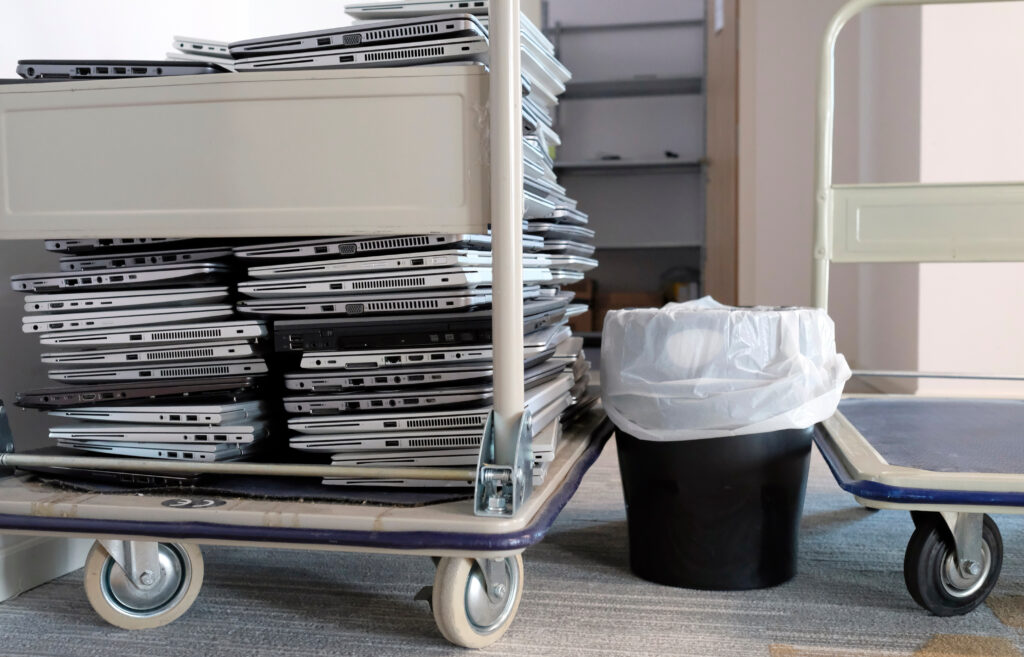
- Laptops and Notebooks: Often retired every 3-4 years.
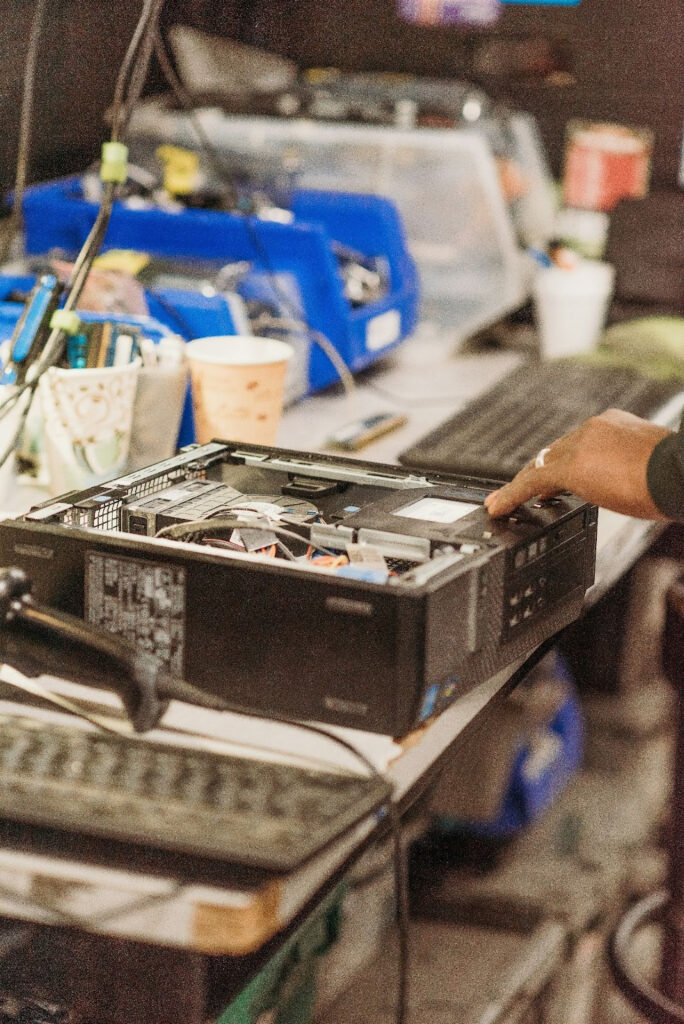
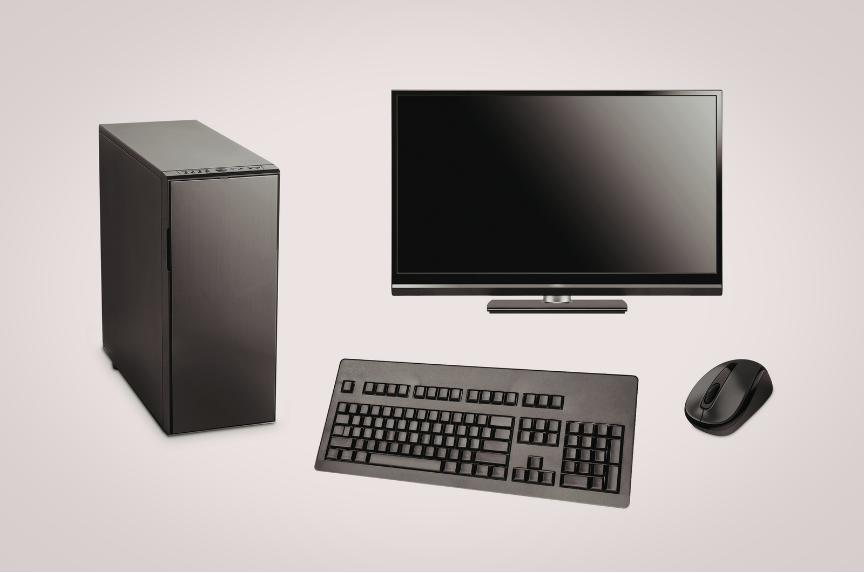
- Desktop Computers (PCs): Towers and workstations.
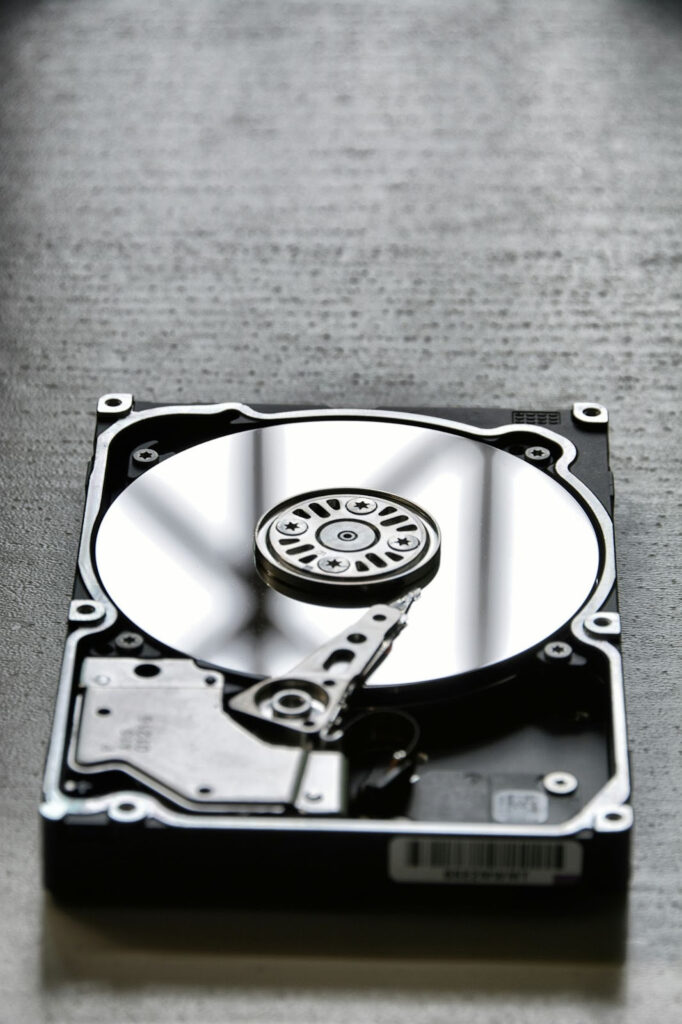
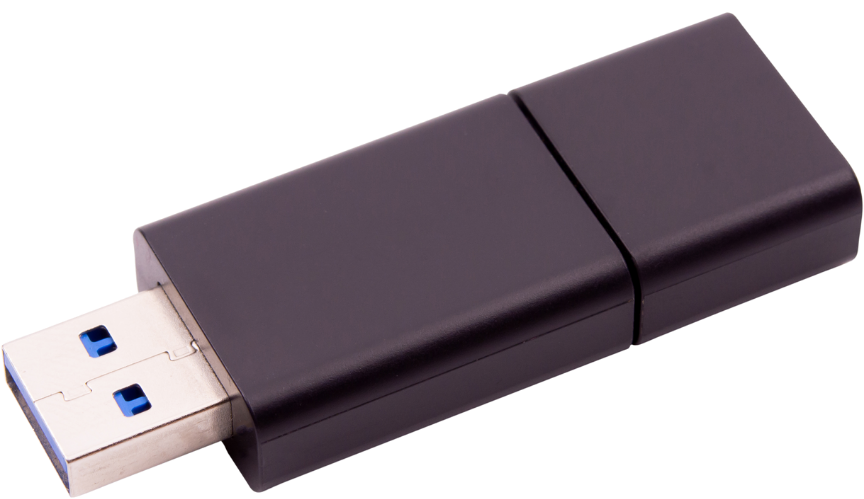
- Data storage devices: Hard drives, SSDs, USB drives, and backup tapes
- Tablets and E-readers: increasingly common in field operations.
2. Enterprise Infrastructure
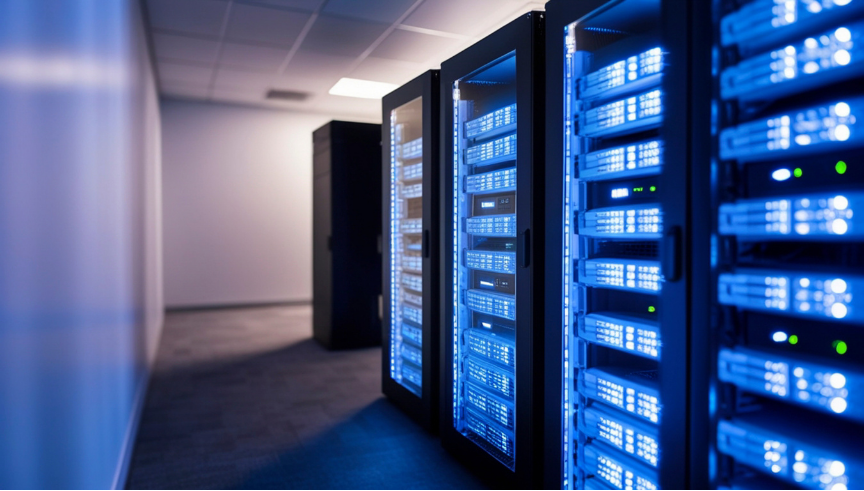
This is the heavy machinery of the IT world. When you migrate to the cloud or upgrade your data center, you are left with substantial hardware that needs professional handling.
- Servers: Rack-mounted, tower, and blade servers.
- Storage Arrays: SAN and NAS systems.
- Networking Gear: Switches, routers, firewalls, and modems.
- Power Supplies: UPS (Uninterruptible Power Supply) units and backup batteries.
3. Peripherals and Office Equipment
These support devices often accumulate in storage rooms simply because people don’t know what to do with them.
- Monitors: LCD and LED screens.
- Printers and Scanners: From desktop units to large, floor-standing multifunction copiers.
- Keyboards and Mice: Often discarded in bulk.
- Cables and Wiring: Power cords, ethernet cables, and connectors.
4. Telecommunications
- Mobile Phones: Corporate smartphones are a major source of e-waste and a significant data security risk.
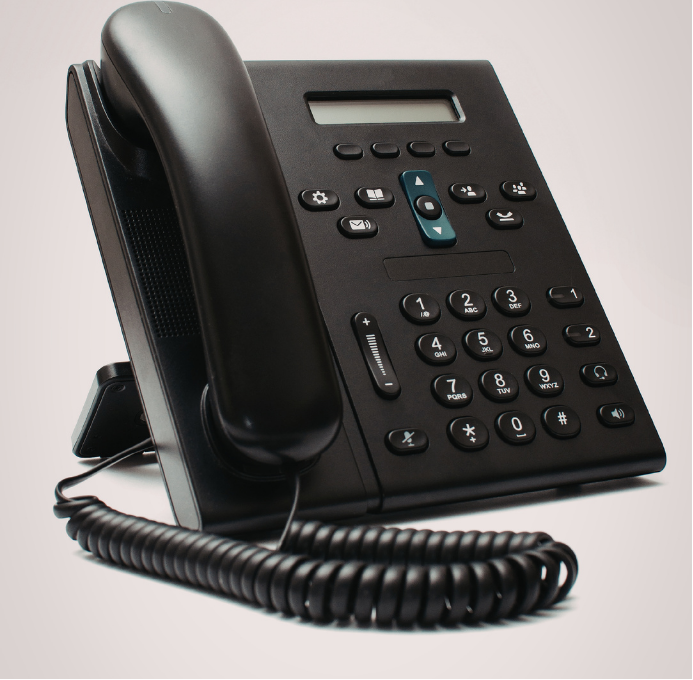
- Desk Phones: VoIP units and legacy PBX systems.
Not sure if we recycle your device? Check out our full list of what we recycle here!
Why Proper E-Waste Management Matters for Your Business
Data Security
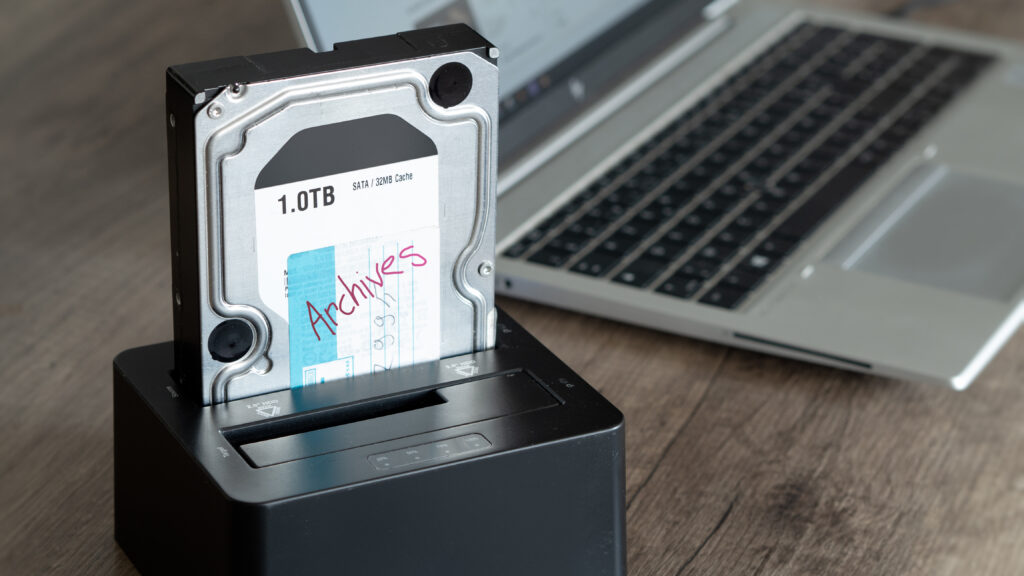
Retired devices often hold sensitive data, including customer records, financial files and proprietary information. A discarded hard drive is a data breach waiting to happen, but certified data destruction removes that risk before equipment leaves your control.
At AIT, we integrate certified data destruction in compliance with NIST SP 800-88 Rev. 2, IEEE 2883-2022 and DoD 5220.22-M data destruction standards directly into the recycling process. Depending on your security requirements, this can be done on-site or off-site.
Regulatory Compliance
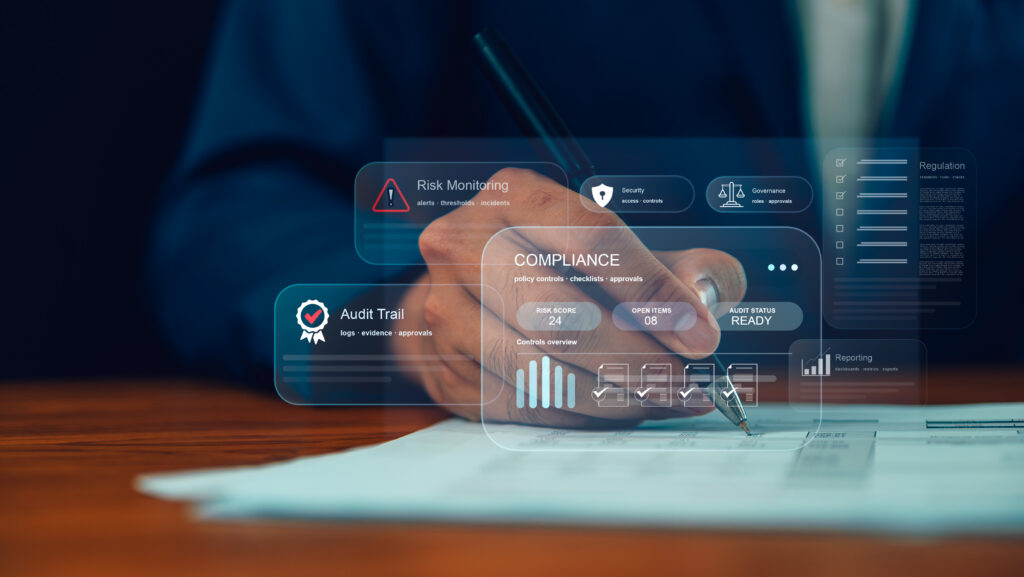
Federal, state, and industry regulations govern how electronics are disposed of. Improper handling can trigger fines and audit failures. Working with a certified partner keeps you aligned with environmental and data-protection standards.
Environmental Responsibility

E-waste contains toxic substances that harm soil, water and the health of humans and animals when landfilled. Responsible recycling recovers valuable materials and keeps hazardous components out of the environment, supporting your organization’s sustainability goals in the process.
How to Handle E-Waste the Right Way
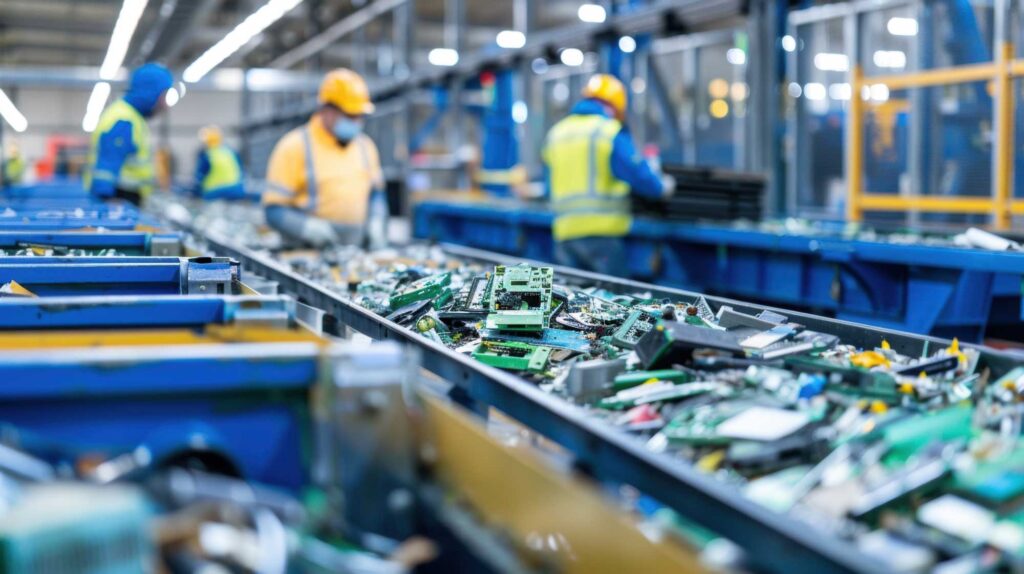
Once you’ve identified your e-waste, the goal is secure, compliant disposal with a full chain-of-custody paper trail. The most reliable way to achieve that is through a formalized IT Asset Disposition (ITAD) program.
An ITAD program establishes a repeatable, predictable workflow for every piece of retired hardware, giving your team a consistent process, your security team confidence that no data slips through, and your finance team clear visibility into asset depreciation and recovery value.
A strong ITAD program with AIT includes:
- Secure logistics: Assets are locked in secured bins and transported in GPS-tracked vehicles to maintain an unbroken chain of custody from the moment they leave your facility.
- Serialized intake and tracking: Every device is individually scanned and reconciled against your asset list upon arrival at our secure, access-controlled processing facility.
- Certified data destruction: All devices are inspected for data storage media. Then, all storage devices undergo certified data destruction with an industrial shredder in accordance with NIST SP 800-88 Rev. 2 guidelines.
- Value recovery and responsible recycling: Functional assets are refurbished and remarketed to recover capital back to your budget by your request; non-viable equipment is recycled in compliance with R2 and e-Stewards standards.
- Compliance closeout: You receive a Certificate of Data Destruction, Certificate of Recycling, and full chain-of-custody documentation – everything you need for a clean audit trail.
This approach protects your data, satisfies all compliance requirements, and gives you documentation you can stand behind during an audit.
Why Your Business Needs an E-Waste Recycling Partner

Managing e-waste effectively requires a chain of custody: You need to know exactly where your equipment goes, how it is processed, and that your data is safe.
Whether you have a single pallet of old laptops or a warehouse full of decommissioned servers, AIT offers certified data destruction, full chain-of-custody tracking, and responsible recycling to help your business dispose of e-waste the right way. Reach out today to build a solution tailored to your organization’s needs.
Ready to Clear Out Your E-Waste?
Don’t let retired technology become a liability. Turn your e-waste challenge into a sustainability win.
Contact AIT Electronic Recycling
We’ll arrange a pickup, destroy your sensitive data, and ensure your business e-waste is recycled responsibly year-round.