Table of Contents

When your organization retires old hardware, the data on those devices does not disappear on its own, and deleting files or restoring factory settings leaves information recoverable in seconds with basic software. That is why media destruction matters: it is the final, decisive step that makes sensitive data impossible to recover, protecting your organization from breaches, fines, and reputational damage.
This guide explains what media destruction is, which devices require it, how the NIST 800-88 sanitization and destruction methods work, and how certified services turn a major security risk into documented, defensible proof of compliance.
What Is Media Destruction?
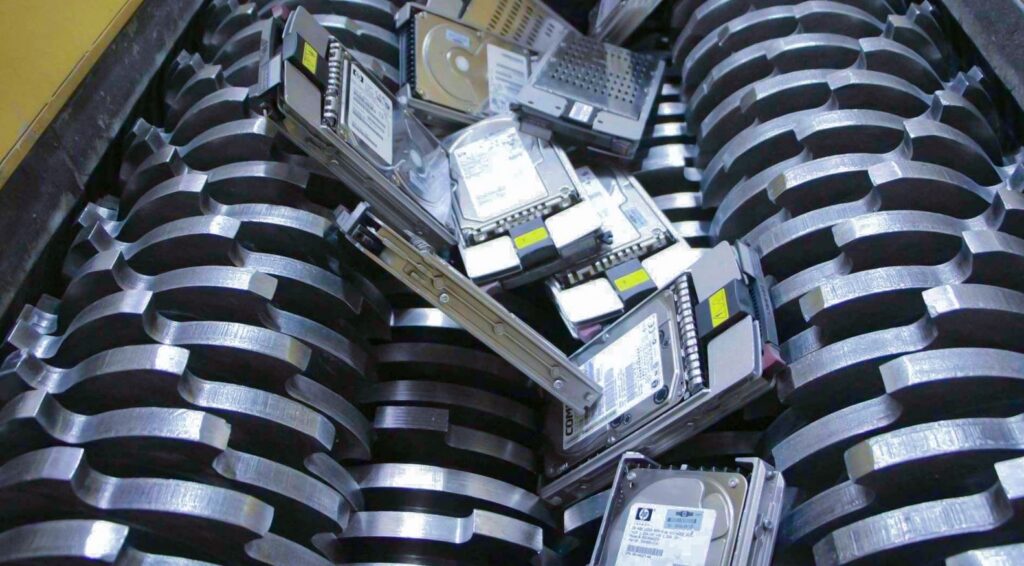
Media destruction is the process of rendering data on a storage device permanently unrecoverable. In most cases, it refers to the physical destruction of the device itself, such as shredding a hard drive into tiny fragments so the data can never be reconstructed.
It helps to understand where media destruction fits within the broader practice of media sanitization:
- Media sanitization covers every method of irreversibly removing or destroying data from a storage device.
- Media destruction is the most secure form of sanitization, physically obliterating the device so nothing remains to recover.
Media destruction is typically performed after other sanitization steps as an additional layer of security. For organizations handling regulated or highly sensitive information, it is often the only method that satisfies both internal policy and external audits.
Which Types of Media Require Destruction?
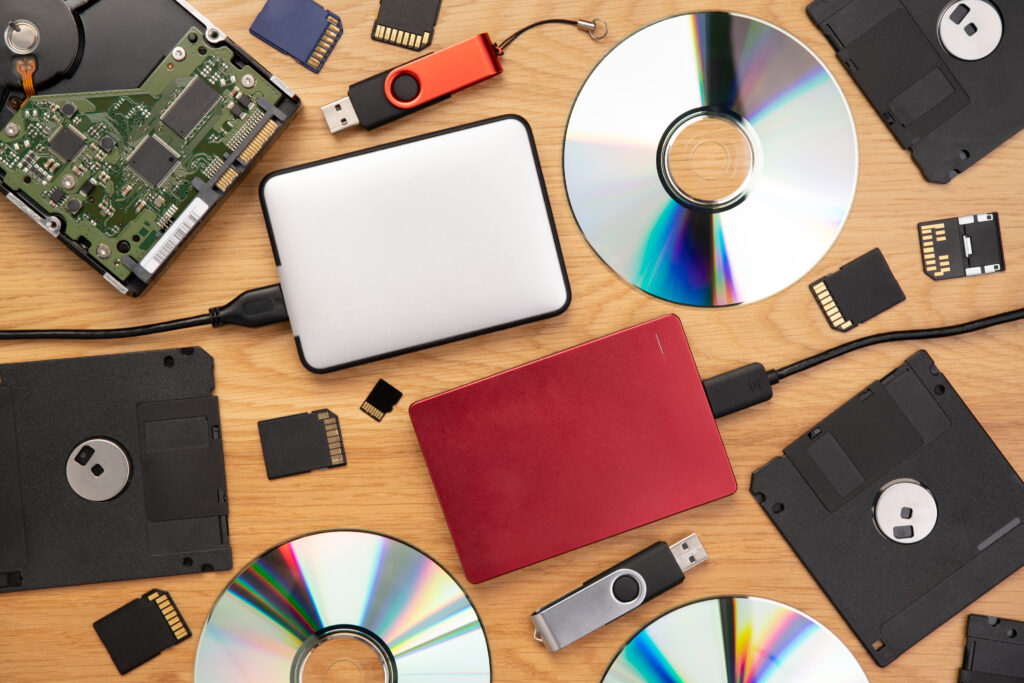
Nearly every modern device stores data, and each media type behaves differently when it comes to secure destruction – knowing what you have is the first step toward choosing the right method.
| Media Type | Common Examples | Notes on Destruction |
|---|---|---|
| Hard Disk Drives (HDDs) | Desktop, laptop, and server drives | Magnetic media; can be degaussed or shredded |
| Solid-State Drives (SSDs) | Laptop storage, enterprise flash arrays | Chip-based; degaussing does not work, so shredding is required |
| Magnetic Tapes | LTO backup tapes, cassettes, reels | Magnetic media; degaussing and shredding both apply |
| Optical Media | CDs, DVDs, Blu-ray discs | Must be physically shredded or crushed |
| Flash Drives & Memory Cards | USB drives, SD cards, CompactFlash | Chip-based; physical destruction is most reliable |
| Embedded Storage | Routers, switches, smart devices, medical equipment | Often overlooked but frequently store credentials and data; should be factory reset and physically destroyed |
A critical point for IT teams: magnetic and chip-based media are not the same. Degaussing effectively wipes magnetic media like HDDs and tapes, but it has no effect on SSDs, flash drives, or memory cards. Those devices store data on chips, which means physical destruction is the dependable path to guaranteed data elimination.
If you are unsure whether a device contains recoverable data, treat it as if it does. Smart TVs, printers, copiers, and lab equipment all commonly retain sensitive information long after they leave service.
The Three NIST 800-88 Sanitization Methods

NIST Special Publication 800-88 is the widely recognized standard for media sanitization, adopted across government agencies, healthcare, finance, and enterprise IT. It defines three methods, each offering a stronger level of security than the last.
Clear
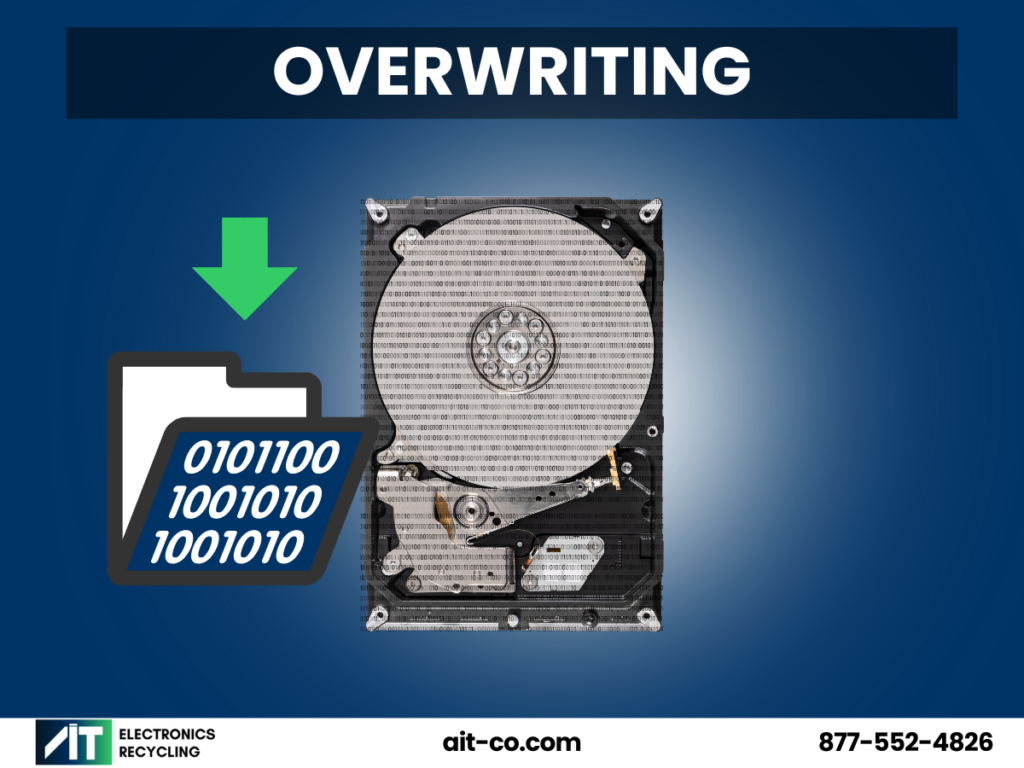
Clearing is a basic cleanup; it overwrites accessible areas of the storage device or resets it to factory settings.
- Suitable for devices being reused internally with non-sensitive data
- Uses standard read/write commands
- Limitation: data may still be recoverable, so this is rarely sufficient for organizations handling sensitive information
Purge
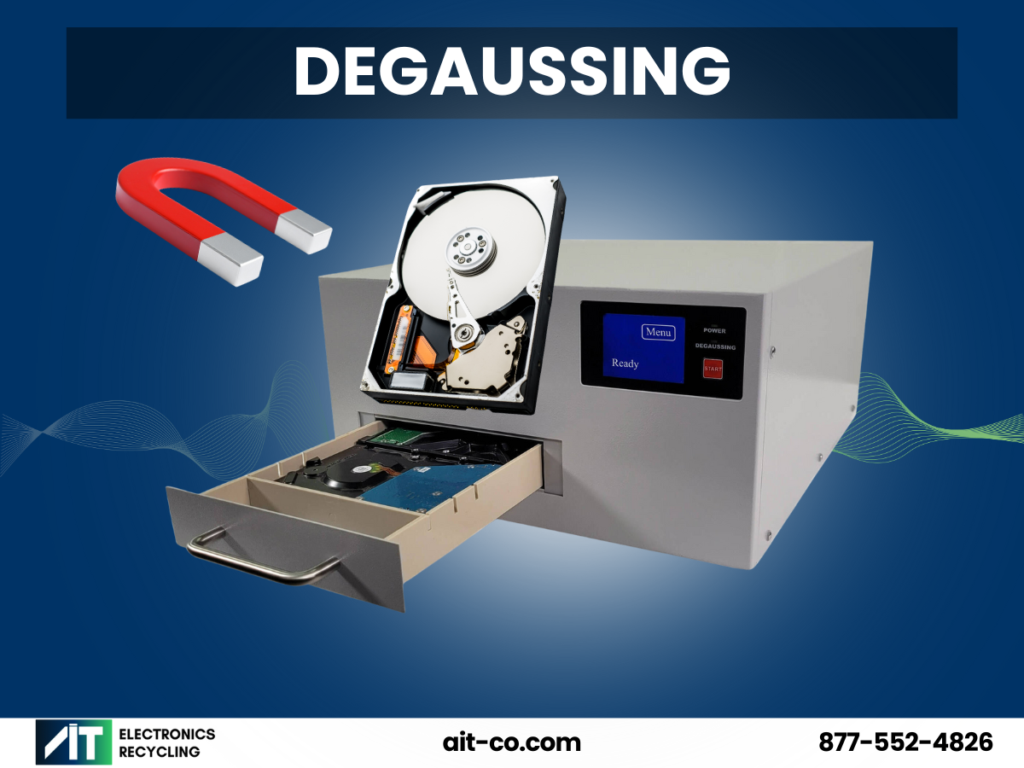
Purging is a deeper process that overwrites or erases data in randomized blocks, and for magnetic media, may include degaussing.
- More secure than clearing
- Applies to HDDs, tapes, and some SSDs through supported commands
- Limitation: portions of data may still be recoverable in certain scenarios, which is why many organizations move to destruction
Destroy
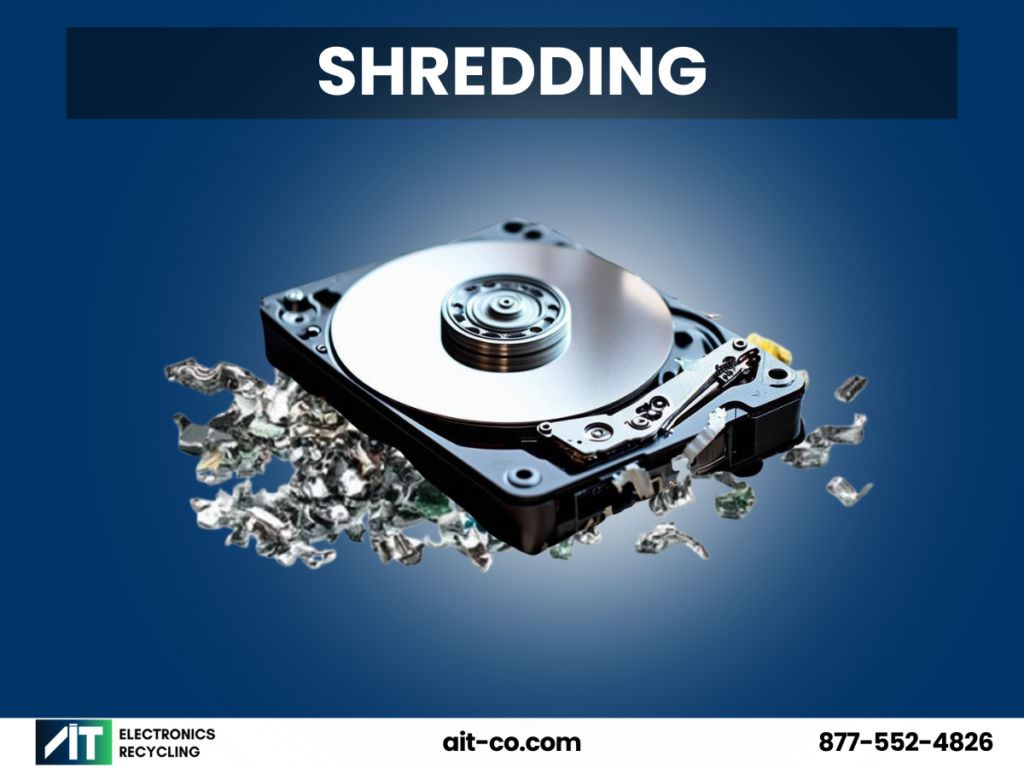
Destruction physically obliterates the storage media so the data cannot be reconstructed by any means. Industrial shredding reduces drives to small fragments, and for magnetic media, degaussing can be applied beforehand.
- The highest level of security available
- Applies to every media type, including HDDs, SSDs, tapes, optical discs, and flash media
- Ideal for ultra-sensitive data and end-of-life devices that will never be reused
Here is the simplest way to think about the three methods:
- Clear = basic overwrite (lowest security)
- Purge = deep erase or degauss (moderate security)
- Destroy = physical destruction (maximum security)
Why Physical Destruction Is the Most Secure Method
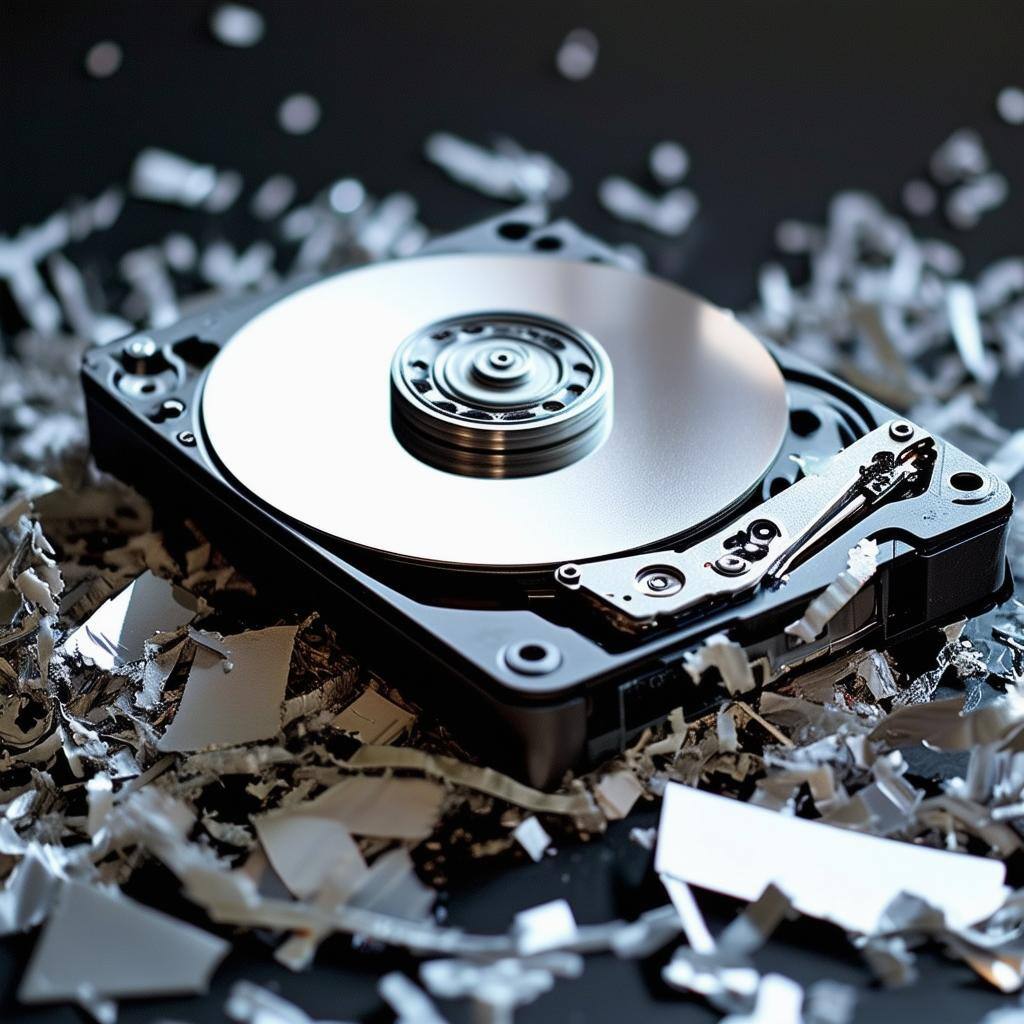
Physically destroying storage media is by far the most secure approach to media destruction. Shredding a data-bearing device meets and exceeds both NIST 800-88 and DoD 5220.22-M sanitization guidelines.
There are three reasons physical destruction stands apart:
- It leaves nothing to recover: Once a drive is shredded into fragments, no software or forensic technique can rebuild the data.
- It works across all media types: Unlike degaussing, which fails on SSDs and flash media, shredding handles every device consistently.
- It provides visible, verifiable proof: A destroyed drive is undeniable evidence for auditors, unlike a wipe that must be trusted on documentation alone.
For organizations weighing risk, this certainty is the deciding factor. A single overlooked or improperly wiped drive can trigger a breach, and physical destruction removes that possibility entirely.
Media Destruction and Compliance Requirements

For many organizations, proper media destruction is a legal and regulatory obligation. Different frameworks impose different requirements, but they share a common expectation: prove that sensitive data was destroyed properly.
- HIPAA: Healthcare organizations must ensure protected health information (PHI) is rendered unusable and unreadable before disposal. Media destruction with documented proof satisfies this requirement.
- GDPR: Organizations handling the personal data of EU residents must securely dispose of that data, with accountability for how and when it was destroyed.
- DoD 5220.22-M: The Department of Defense standard set the earlier benchmark for sanitization, but NIST 800-88 and IEEE 2883-2022 has since surpassed it, particularly because it accounts for chip-based media like SSDs that older standards did not address.
- IEEE 2883-2022: Published by the Institute of Electrical and Electronics Engineers, this standard provides detailed technical guidance for sanitizing and destroying storage devices, covering HDDs, SSDs, and flash media. It complements NIST 800-88 and is increasingly referenced by enterprises and auditors seeking a more granular framework for modern media types.
Any government agency, contractor, or subcontractor handling government data is required to follow NIST guidelines. Beyond that, these standards are strongly recommended for any company or organization with private or sensitive information. With data breaches continuing to rise, destroying data before recycling devices is essential to reducing liability.
Documentation is the other half of compliance since destroying a device is only defensible if you can prove it happened. That means secure destruction must be paired with certificates and chain-of-custody records that stand up to audits.
How AIT’s Certified Media Destruction Services Meet Every NIST Requirement

AIT provides certified media destruction built to meet the strictest security and compliance requirements. Our services are designed to remove risk at every stage, from pickup to final documentation. Every step of our workflow aligns with rigorous frameworks including NIST SP 800-88, DoD 5220.22-M, and IEEE 2883-2022, and our downstream recycling partners operate in full compliance with R2v3 and e-Stewards e-waste recycling standards.
We physically shred storage media into small fragments, guaranteeing that data is irretrievable:
- Effective for HDDs, SSDs, flash media, optical discs, and tapes
- The preferred method for ultra-sensitive, obsolete, or high-risk devices
- Available on-site at your facility or at our secure processing location
For magnetic media, we apply a powerful magnetic field that neutralizes the stored data:
- Fast and highly secure for hard disk drives and magnetic tapes
- Used as an added layer before physical destruction
- Not suitable for SSDs or flash media, where shredding is required instead
We are also able to factory reset and overwrite devices prior to physical destruction as an added security measure.
Certificates of Destruction

Documentation turns secure destruction into defensible proof. After every job, you receive a Certificate of Destruction tied to the serial number of each device processed.
- Asset-level detail for every data storage device destroyed
- Regulator-recognized records ready for HIPAA, GDPR, and internal audits
- Paired with a Certificate of Recycling for the hardware housing the media
Chain of Custody and Serialized Tracking

We track every device by its unique serial number from the moment it enters our custody, maintaining a continuous, tamper-proof chain of custody.
- Transport in lockable, GPS-tracked vehicles
- Serialized intake and reconciliation against your master list
- On-site or recorded proof of destruction available by request
For a deeper look at how these processes work together, explore our Complete Guide to Certified Data Destruction or learn more about our certified data destruction services.
Putting Media Destruction Into Practice

A strong media destruction plan comes down to a few clear steps:
- Identify your data-bearing devices: Account for everything from servers and laptops to backup tapes, flash drives, and embedded storage.
💡 For organizations with large volumes of assets, this can be a significant undertaking. AIT can help – once materials are brought back to our facility, our team inspects each device to identify which components contain data storage, so nothing is overlooked.
- Match the method to the media: Use shredding for chip-based devices and either degaussing or shredding for magnetic media.
- Choose destruction for sensitive data: When information is regulated or highly confidential, physical destruction offers the certainty that wiping cannot.
- Demand documentation:. Insist on serialized Certificates of Destruction and full chain-of-custody records to close the compliance loop.
Handled correctly, media destruction transforms one of your biggest security exposures into a documented, audit-ready process.
Secure Your Media Destruction Strategy with AIT

Retired storage devices should never become a security risk. With certified media destruction, transparent reporting, and full chain-of-custody documentation, AIT helps your organization protect sensitive data and stay compliant with confidence.
Whether you need one-time data destruction or a full-service ITAD program, our team is ready to build a solution around your requirements.